300 Hour Yoga Teacher Training Curriculum & Syllabus
The 300 hour yoga teacher training curriculum at Rishikesh Yogpeeth is a journey into deeper practice, awareness and teaching. Our 300 hour yoga teacher training syllabus builds on your 200-hour foundation and invites you to explore yoga beyond the physical postures.
Over four weeks, you will refine your asana practice, study ancient yogic wisdom and understand the body with greater clarity. You will also learn to share yoga with more confidence, sensitivity and care.
This is not simply about learning more poses. It is about becoming a more thoughtful student of yoga and a more grounded teacher.
What Will You Learn in Our 300-Hour YTT?
Our programme brings together physical practice, breathwork, meditation, anatomy, philosophy and teaching skills. Each area supports the others.
The 300 hour yoga TTC syllabus Rishikesh students experience is designed for those who have already completed a recognised 200-hour yoga teacher training course.
During your training, you will explore:
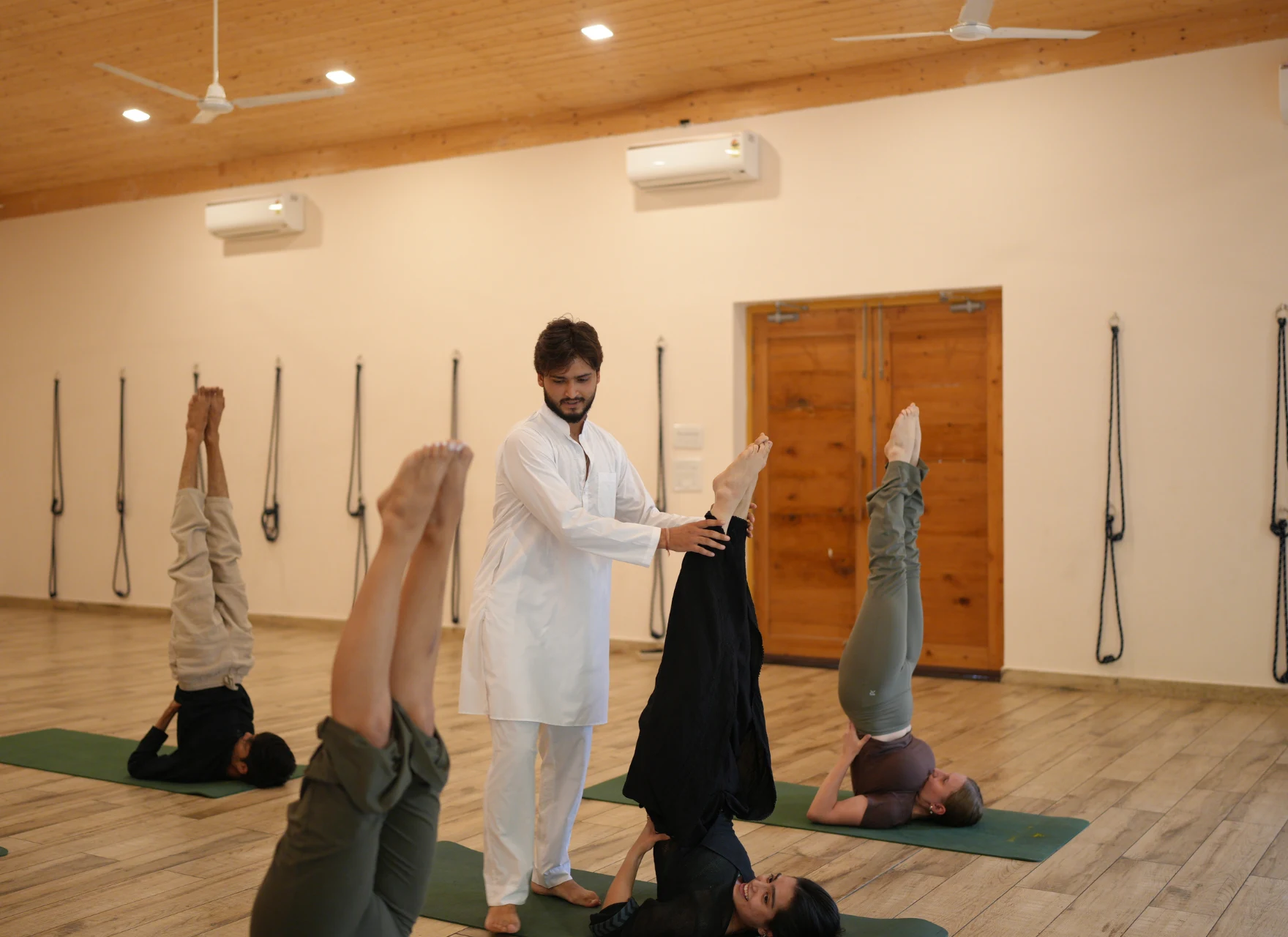
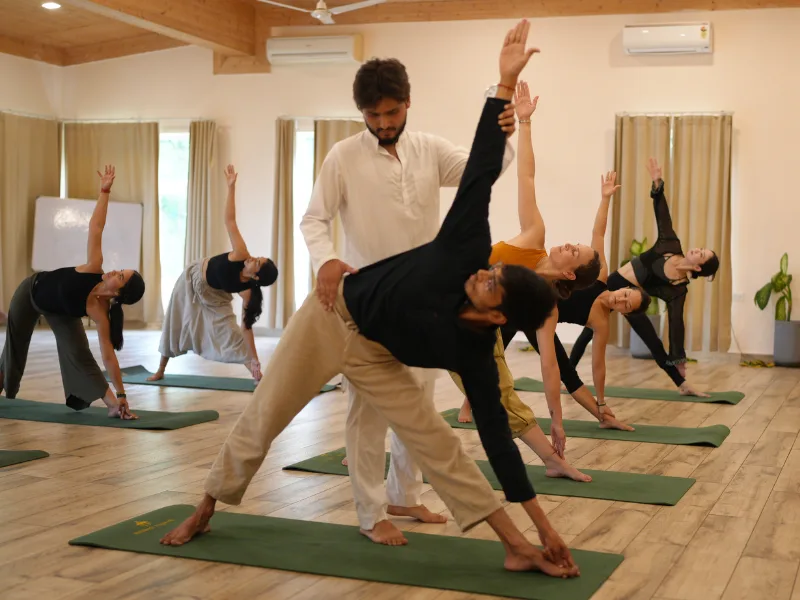
- Advanced asana practice: Refine alignment, explore inversions and develop a deeper understanding of postures.
- Pranayama and bandhas: Study breath regulation and traditional yogic energy locks.
- Meditation and mantra: Cultivate concentration, inner stillness and awareness.
- Anatomy and physiology: Understand movement, breathing and safe adaptations.
- Yoga philosophy: Explore classical Indian philosophy, Patanjali’s Yoga Sutras and the Bhagavad Gita.
- Teaching development: Strengthen your ability to understand, practise and explain yoga.
You will move between the mat, the classroom and moments of quiet reflection. Gradually, your practice can become more attentive. Your teaching can become more considered.
Our 300-Hour Curriculum at a Glance
Our 300 hour yoga teacher training curriculum Rishikesh programme follows a residential learning format at Abhayaranya Yoga Ashram. The course lasts four weeks and focuses on Hatha Yoga.
The table below offers an overview of the principal learning areas in our 300 hour yoga TTC curriculum. We have not assigned individual module hours because a verified hour-by-hour allocation is not published in our course information.
| Learning area | What you will explore |
|---|---|
| Asana and practice | Hatha postures, alignment, Sun Salutations, inversions and restorative poses |
| Pranayama and bandhas | Breathwork, traditional practices and the foundations of teaching them |
| Meditation and mantra | Concentration, inner silence, chanting and awareness |
| Anatomy and physiology | Musculoskeletal, respiratory and nervous systems, with attention to safe practice |
| Philosophy | Yoga’s historical roots, Patanjali’s Yoga Sutras and the Bhagavad Gita |
| Yogic lifestyle | Self-study, daily discipline and the integration of yoga into everyday life |
| Teaching and evaluation | Written and practical assessments, with student conduct and attendance requirements |
Our 300 hour yoga teacher training syllabus India offering is intended to deepen your understanding rather than repeat your first teacher training. The learning areas work together to help you grow as both a practitioner and a teacher.
Ready to take the next step? Explore our course fees and dates and find a batch that suits your journey.
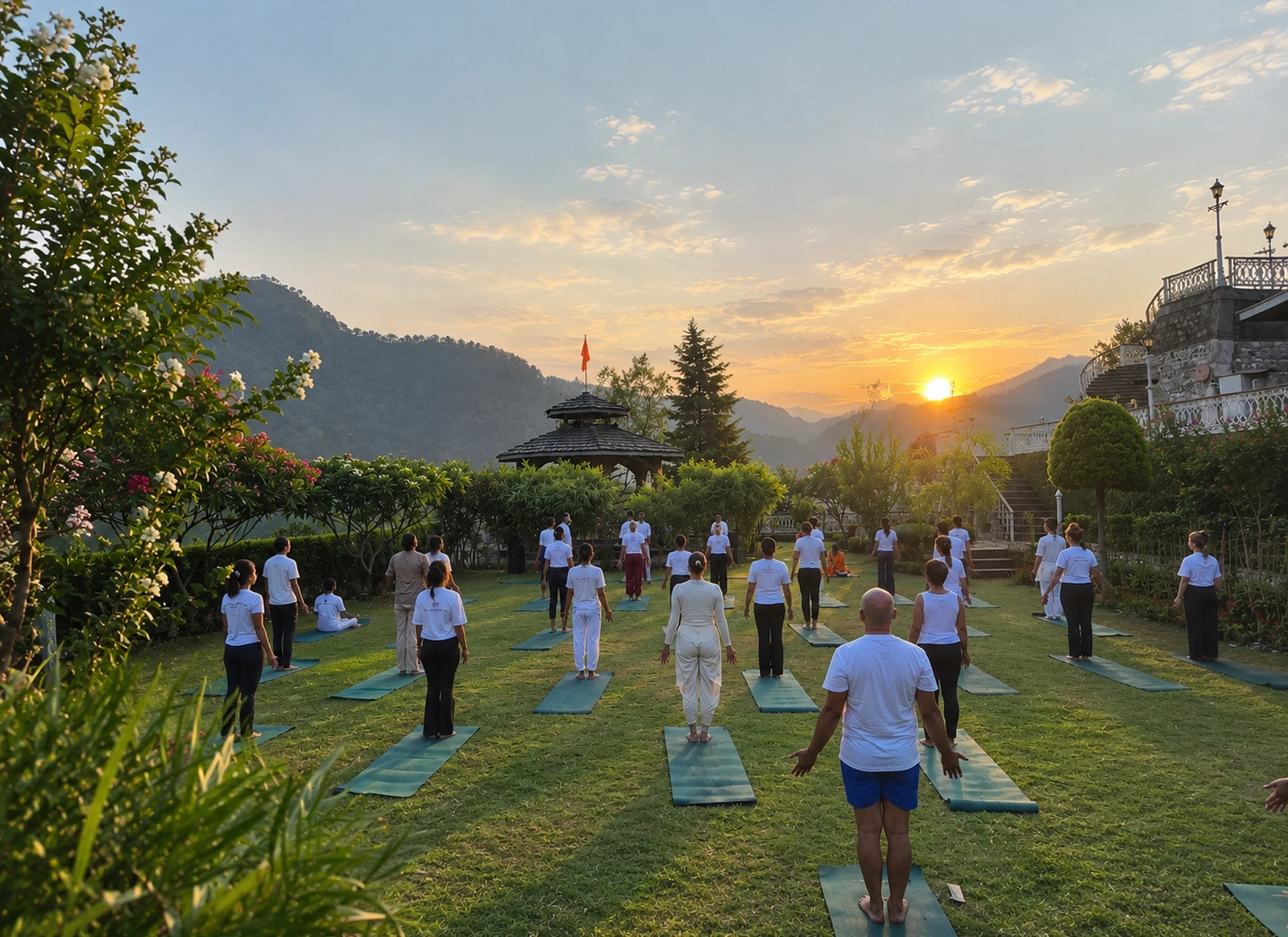
When Your Practice Begins to Change You
There comes a moment in yoga when the questions begin to change.
You stop asking how far you can stretch. You begin asking how deeply you can listen.
You stop measuring every practice by what you achieve. You start noticing what you understand.
Our 300 hour yoga teacher training curriculum gives you the opportunity to return to your practice with fresh eyes. You explore familiar postures more deeply. You revisit the teachings you once studied. You begin to notice the details that may have passed you by before.
The 300 hour yoga teacher training syllabus brings together practice, study and reflection. Each day offers another opportunity to understand yoga beyond its outer form.
Some lessons arrive through movement. Others emerge in silence. And sometimes, the most meaningful discovery is learning to meet yourself exactly where you are.
Who Is This Training For?
This course is for practitioners who feel ready to explore yoga more deeply.
Perhaps you have completed your first teacher training and want to strengthen your understanding. Perhaps you have started teaching and wish to return to the foundations with fresh eyes.
You may be looking for more than new techniques. You may want to understand why you practise, how you teach and what yoga means in your everyday life.
Our programme may suit you if you:
- Have completed a recognised 200-hour yoga teacher training.
- Want to deepen your Hatha Yoga practice.
- Wish to explore anatomy, philosophy and meditation further.
- Want to continue developing your teaching knowledge.
- Are ready for an intensive residential learning experience.
You do not need to have everything figured out before you arrive.
Come with curiosity. Bring your questions. Be willing to learn.
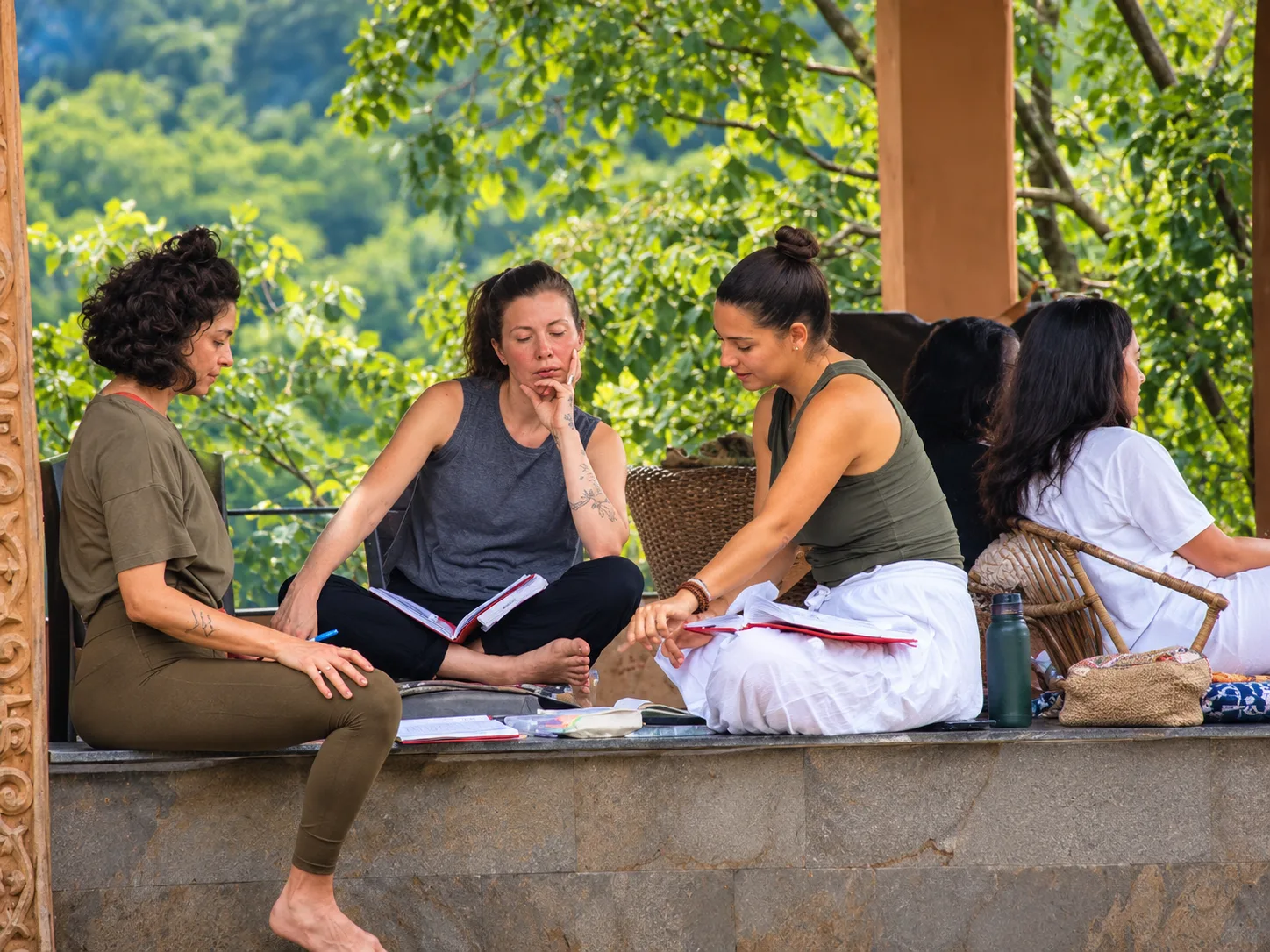
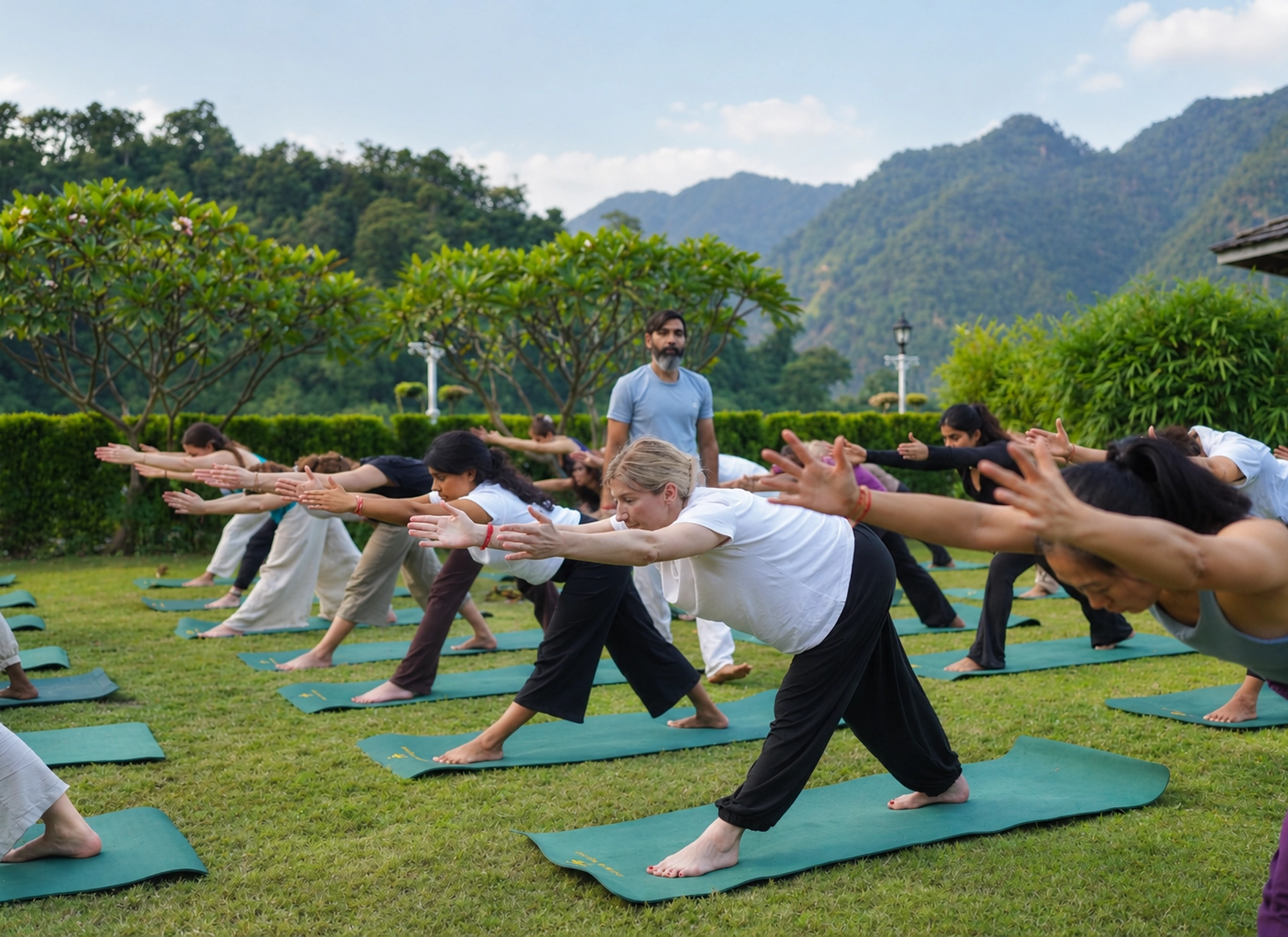
Advanced Asana and Personal Practice
Yoga asks us to pay attention. Advanced practice teaches us to pay attention more deeply.
Our asana sessions explore the evolution of postures, from traditional Hatha practice to alignment-based approaches. You will study Sanskrit names, the benefits traditionally associated with postures and their contraindications.
Your practice includes:
- Different forms of Sun Salutations.
- Inversions and their place in asana practice.
- Restorative postures.
- Alignment and controlled movement.
- An introduction to pranayama and bandhas.
Depending on the teacher’s discretion, sessions may also introduce elements of Iyengar and Ashtanga Yoga.
Our 300 hour Hatha yoga teacher training curriculum places Hatha Yoga at its centre. Other approaches are explored selectively, rather than presented as separate guaranteed specialisations.
The purpose is not to force the body into a shape. It is to develop a more sensitive relationship with movement, alignment and the breath.
You begin to notice what a posture asks of you. You learn to respect your present limits while continuing to explore your potential.
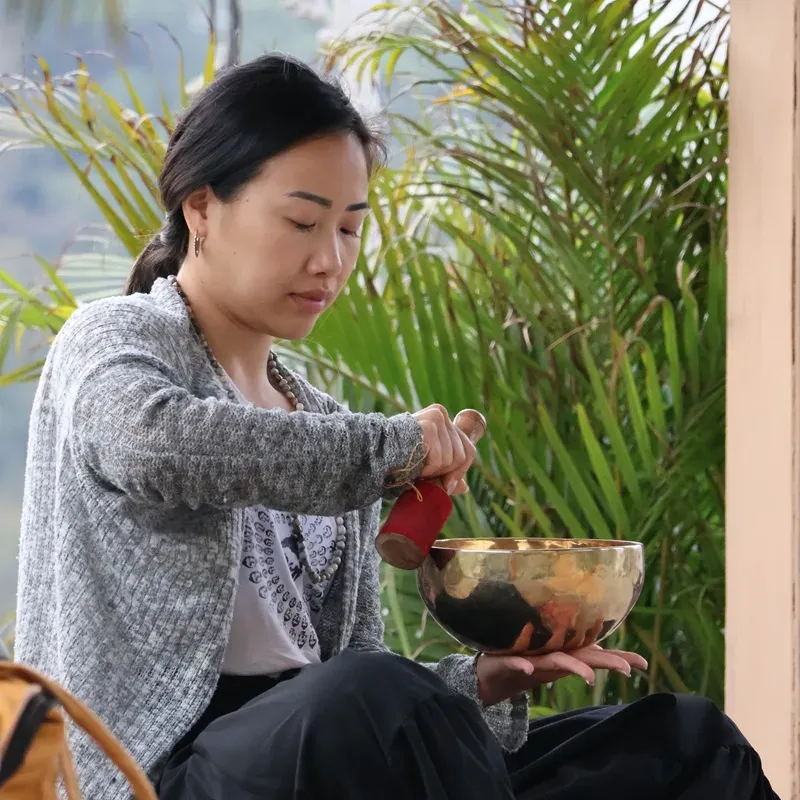
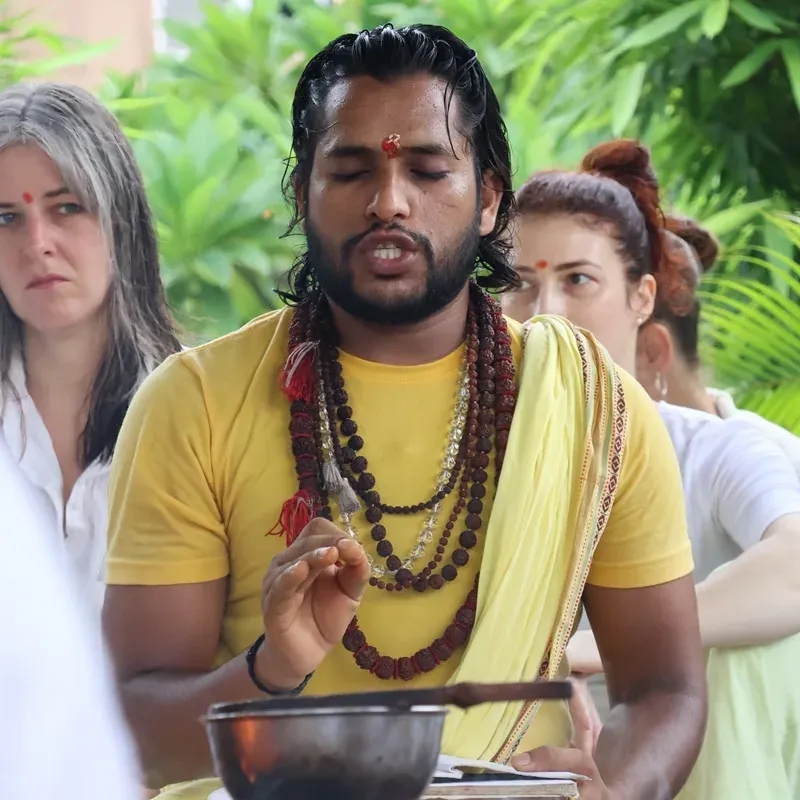
Pranayama, Meditation and Mantra
Sometimes, the deepest learning happens when we become still.
Our training explores pranayama as a personal discipline and a practice you can learn to guide. You will study breath regulation, its relationship with attention and ways to communicate these practices responsibly.
Mantra sessions introduce sound, rhythm, voice modulation and conscious silence. You will practise chanting and explore how mantra can become part of a yoga teaching experience.
Our meditation sessions include:
- Pratyahara, or turning awareness inward.
- Antar Mouna, the practice of inner silence.
- Trataka, or candle-gazing.
- Mandala-based meditation.
- An introduction to chakras and meditative awareness.
These practices invite you to observe the mind without rushing to change every thought. They offer opportunities to cultivate patience, concentration and steadiness.
The intention is not to promise a particular emotional or physical outcome. It is to help you experience the practices, understand their place in yoga and approach them with care when sharing them with others.
Continue your journey with us. Visit our 300-hour course page to explore the residential experience, accommodation and upcoming batches.
Philosophy, Lifestyle and Ethics
Yoga is a practice on the mat. It is also a way of examining how we meet life.
Our philosophy sessions explore yoga’s historical roots and classical Indian thought. You will study important ideas from Patanjali’s Yoga Sutras and the Bhagavad Gita.
Your learning includes:
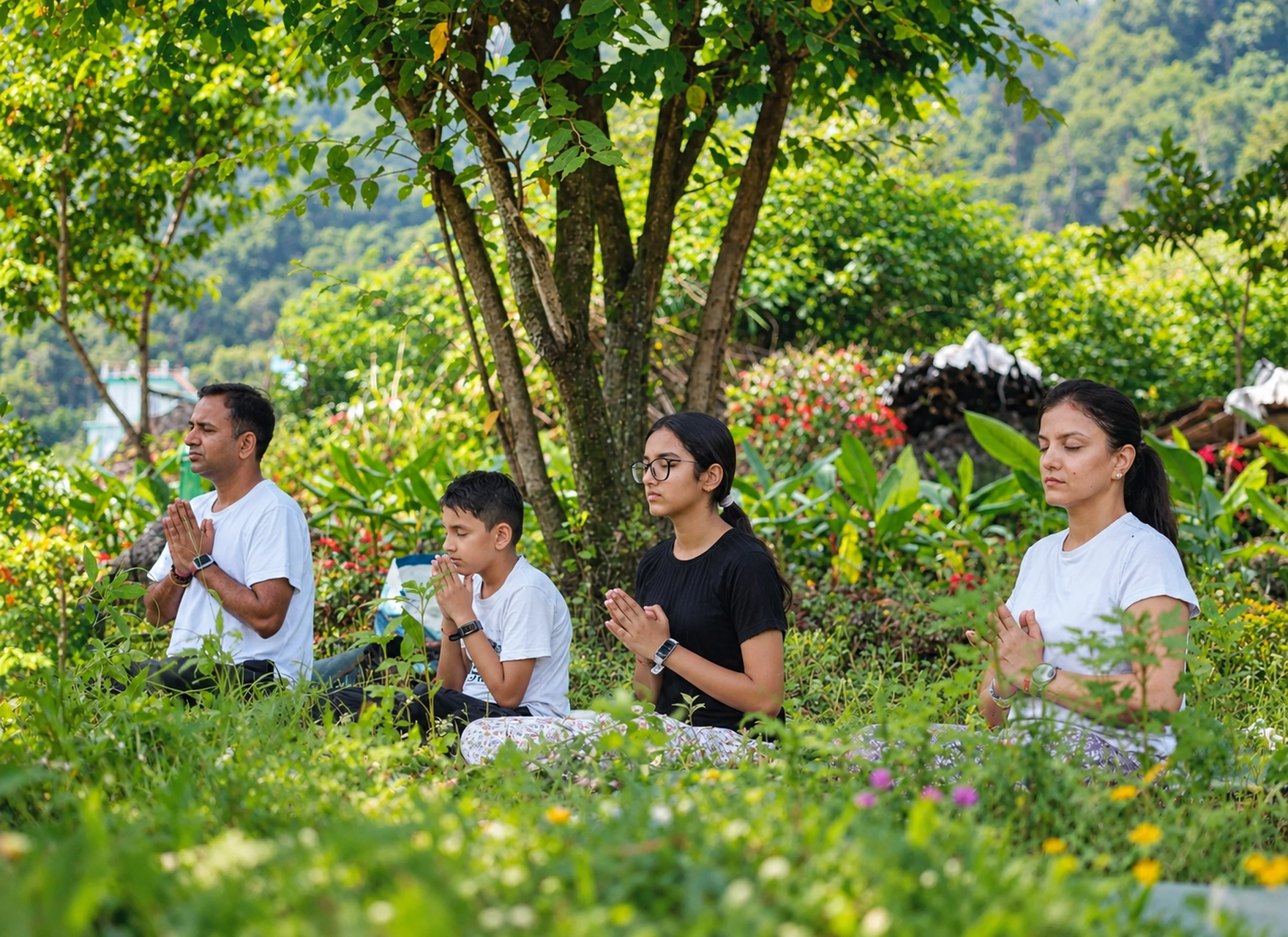
- The Eight Limbs of Yoga: Yama, Niyama, Asana, Pranayama, Pratyahara, Dharana, Dhyana and Samadhi.
- Ethical living: Reflecting on the principles of Yama and Niyama.
- Karma Yoga: Exploring action and the idea of selfless service.
- Bhakti Yoga: Understanding the path of devotion.
- Jnana Yoga: Exploring the path of knowledge.
- Swadhyaya: Making space for self-study and reflection.
These teachings invite questions rather than quick answers. What does it mean to practise with honesty? How do we remain humble as teachers? How can yoga influence the choices we make beyond the classroom?
You will have space to explore these questions through study and practice. Over time, philosophy can become more than something you remember. It can become something you reflect upon in everyday life.
Want to experience learning in the Himalayas? Explore our course details and fees before planning your stay.
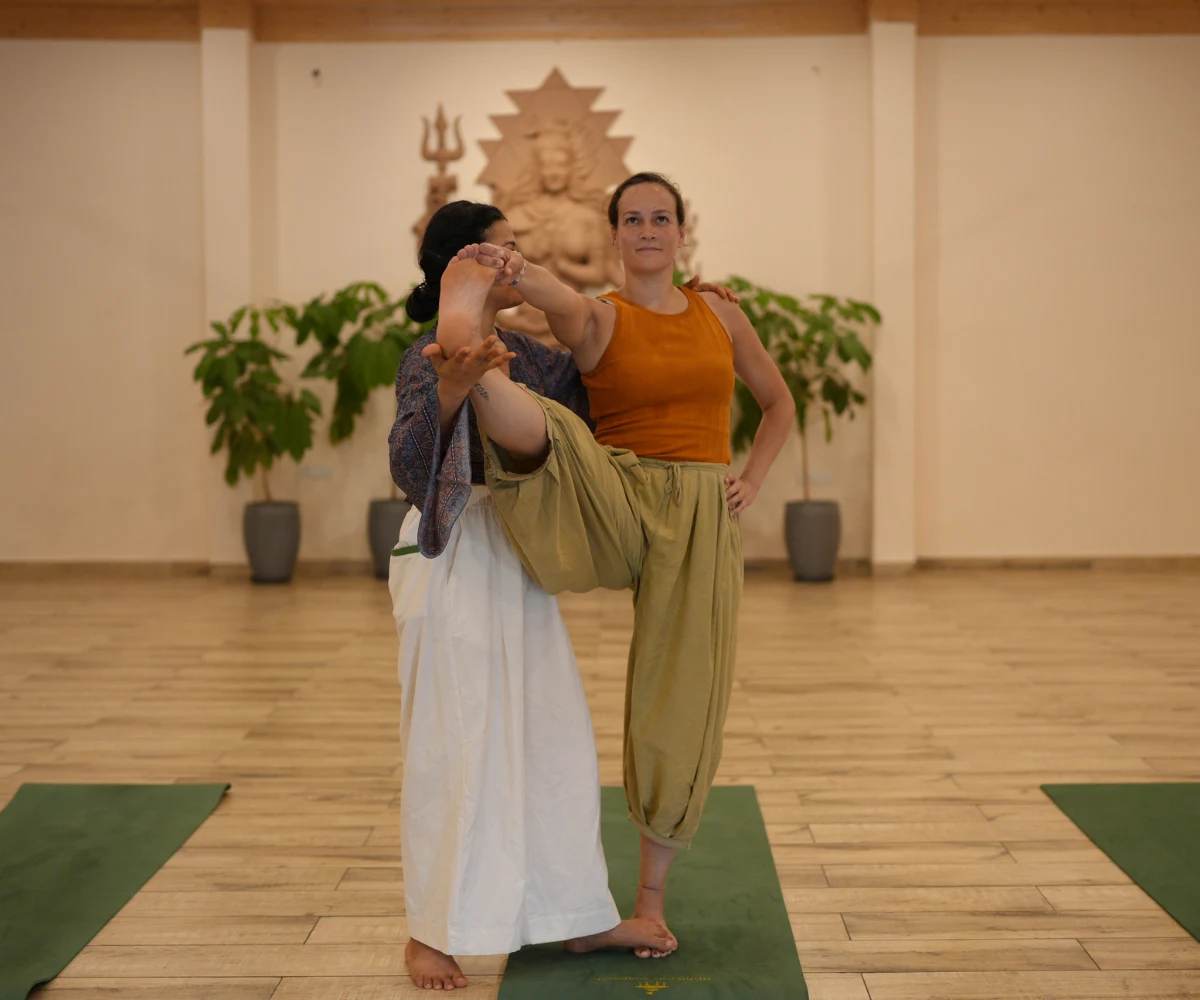
Advanced Teaching Methodology
Knowing yoga and teaching yoga are different skills. Our programme helps you deepen your understanding of the practices you may eventually guide others through.
The 300 hour YTT teaching methodology builds on the foundation you bring from your first training. You will continue developing your understanding of asana, breathwork, meditation and the principles behind them.
Our learning approach includes:
- Observing postures and their alignment.
- Understanding the purpose and limitations of different practices.
- Exploring Sanskrit terminology and the language of yoga.
- Developing your understanding of pranayama and meditation.
- Learning to consider individual needs and contraindications.
- Connecting practical experience with philosophical understanding.
These areas support the advanced yoga teacher training syllabus offered through our programme. They help you approach teaching with more awareness, preparation and respect for each student.
We encourage a thoughtful relationship with knowledge. A good teacher does not need to have an answer to everything. A good teacher needs to keep learning, observe carefully and understand when a practice requires modification.
Practicum, Assessment and Feedback
Teaching develops through study, practice and reflection. It also requires discipline.
Our 300 hour yoga teacher training practicum learning is supported by practical and written evaluation. Student conduct is also part of the assessment process.
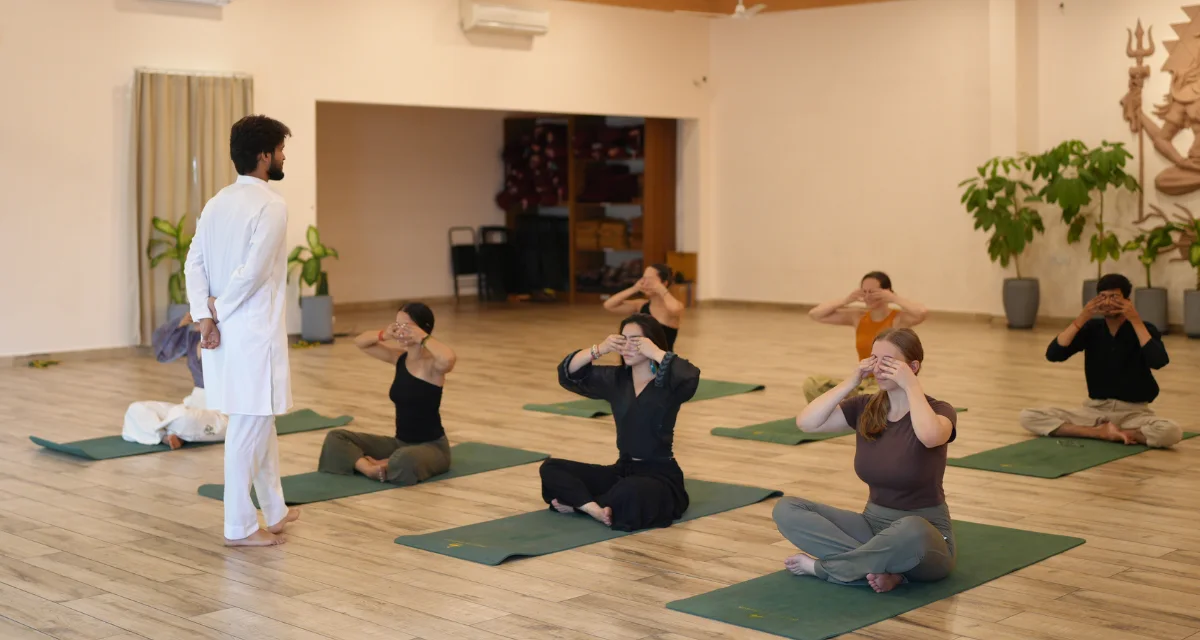
To complete the course evaluation, you must maintain at least 90% attendance.
Assessment helps establish whether you have engaged with the programme and understood its learning areas. It is an opportunity to take responsibility for your progress.
We recommend consistent self-study throughout the training. The residential schedule is intensive, so arriving prepared to participate fully is important.
The 300 hour yoga teacher training practicum should be approached as part of a wider learning process. Use your time to observe, ask questions, reflect on feedback and strengthen your understanding.
Our 300 hour YTT teaching methodology also encourages you to connect what you learn in class with the care and attention required when guiding future students.
Take the next step towards your training. Review our course dates, fees and enrolment information.
How the 200-Hour and 300-Hour Curricula Differ
The 200-hour course establishes your foundation. The 300-hour course builds on it.
| Area | 200-hour training | 300-hour training |
|---|---|---|
| Practice | Establish foundational understanding | Deepen and refine existing practice |
| Asana | Learn key postures and principles | Explore alignment, progression and contraindications in greater depth |
| Anatomy | Develop introductory knowledge | Apply deeper anatomical understanding to practice |
| Philosophy | Study foundational yogic ideas | Explore classical teachings and their wider meaning |
| Teaching | Build initial teaching skills | Strengthen understanding and teaching confidence |
| Personal growth | Establish a regular practice | Continue developing discipline, awareness and reflection |
Our 300 hour yoga teacher training curriculum is designed for graduates who are ready to continue their education. It is not a replacement for foundational training.
The 300 hour Hatha yoga teacher training curriculum gives you further opportunities to explore Hatha practice while studying anatomy, philosophy, pranayama and meditation together.
Likewise, the 300 hour yoga anatomy and philosophy curriculum connects knowledge of the body with a broader understanding of yogic thought. This combination can help you approach your teaching with greater perspective.
If you have completed your 200-hour training at another recognised school, you can also apply to join us, provided you meet our eligibility requirements.
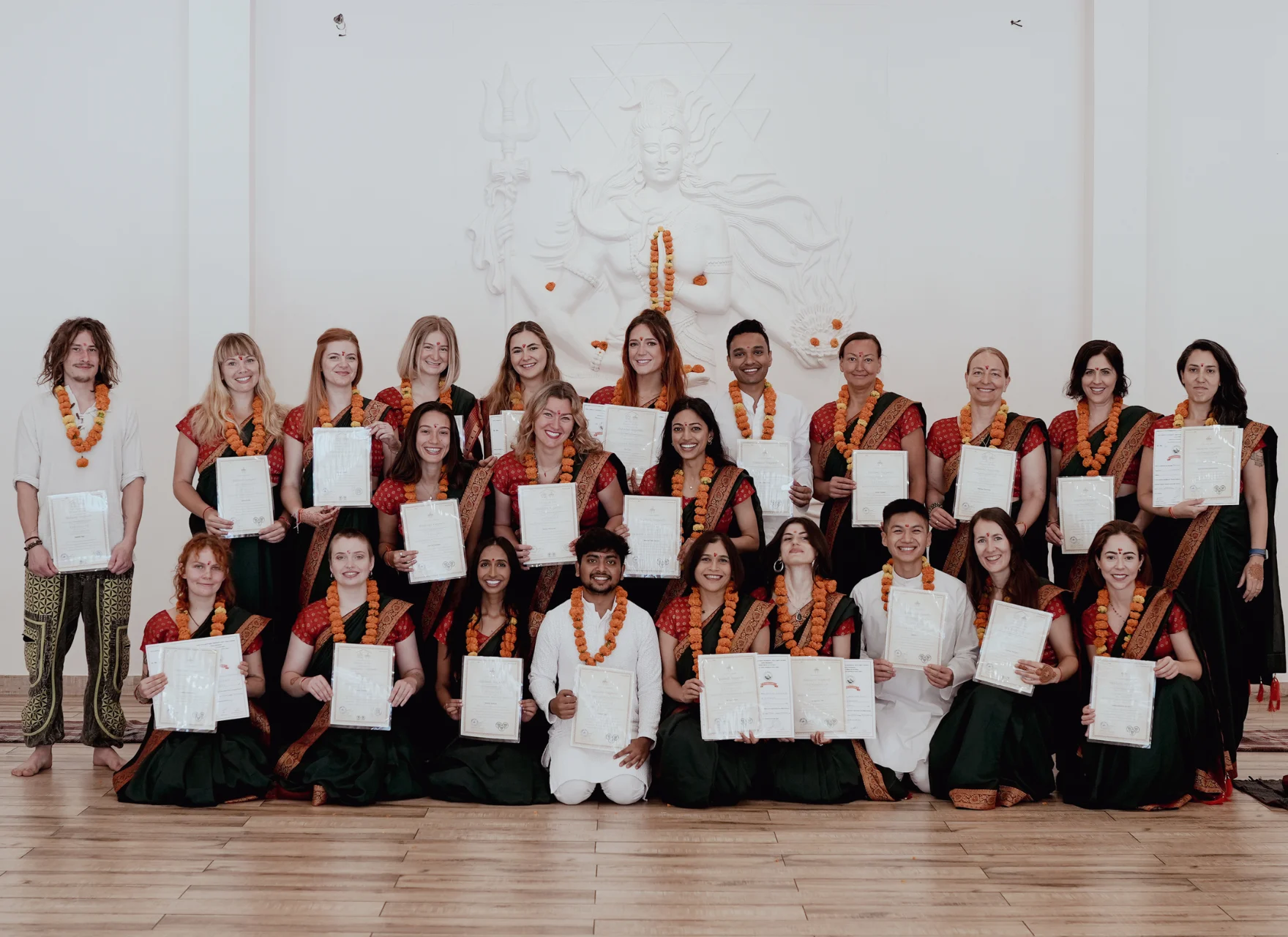
Your Journey Does Not End with a Certificate
A certificate can recognise your training.
But it cannot measure every quiet moment of understanding, every question that changes your perspective or every lesson that continues to unfold after graduation.
Our 300 hour yoga teacher training practicum forms part of your learning and evaluation experience. Alongside your studies, it is important to keep reflecting on how your knowledge develops and how you may apply it responsibly.
The 300 hour YTT teaching methodology you explore can contribute to your ongoing development as a teacher, while your personal practice remains a place to return to throughout your life.
After graduation, you may find yourself approaching a familiar posture differently. You may listen more carefully to your students. You may feel inspired to continue studying a philosophical text or exploring a new aspect of your practice.
Let the certificate mark a milestone, not a finish line.
Keep returning to the mat. Keep asking questions. Keep making space for wonder. That is how learning continues.
Explore our 300 hour yoga TTC syllabus Rishikesh programme, review the practical details and speak with our team about your questions.
We want you to make an informed decision and arrive knowing what to expect. Your journey is personal. There is no need to compare it with anyone else’s. Take your time. Ask your questions. And when you are ready, take the next step.
We look forward to welcoming you to Rishikesh Yogpeeth. Explore our 300-hour yoga teacher training, fees and dates
Curriculum FAQs
Students deepen their asana practice and study pranayama, meditation, mantra, anatomy, physiology and yoga philosophy. At Rishikesh Yogpeeth, the programme builds on previous training and supports continued development as a yoga teacher.
The 200-hour course establishes the foundation. Our 300-hour programme allows you to explore practices and concepts in greater depth. You must have completed a recognised 200-hour yoga teacher training before enrolling.
You explore alignment, contraindications, the principles behind yoga practices and the application of your learning. Our 300 hour YTT teaching methodology is part of this broader development, although a detailed, separately itemised teaching-methodology module is not published.
Our course information confirms written and practical evaluations. It does not publish a separate number of practicum hours or a detailed feedback schedule. Contact our team if you need those details before enrolling.
Anatomy covers the musculoskeletal, respiratory and nervous systems, alongside safe adaptations. Philosophy includes Patanjali’s Yoga Sutras, the Eight Limbs of Yoga and the Bhagavad Gita. Ethical reflection is explored through yogic principles such as Yama and Niyama.
Yes. Hatha Yoga is the main style. Depending on the teacher’s discretion, elements of Iyengar and Ashtanga Yoga may also be explored. These are not guaranteed separate specialisations.
Assessment includes written and practical evaluations, as well as student conduct. At least 90% attendance is compulsory for course evaluation.
You can review the published curriculum on our website. If you need a more detailed module breakdown, teaching-practice allocation or assessment information, please contact us before paying. Our 300 hour yoga teacher training practicum details should be clarified with our team if you need a confirmed number of hours.
Begin Your Next Chapter with Rishikesh Yogpeeth
The 300 hour yoga TTC syllabus Rishikesh offers is a continuation of your journey, not a finish line.
Here, you will have time to practise, study and reflect. You will learn among the Himalayan surroundings of Abhayaranya Yoga Ashram. You will share a residential experience with fellow students who have also chosen to deepen their relationship with yoga.
Our Yoga Alliance RYS 300 syllabus follows the stated RYT 300 standards. On successful completion, you can become eligible to register as RYT 500 after meeting the relevant 200-hour and 300-hour training requirements. An optional HNBGU certificate is also available at an additional cost.
Your practice has brought you this far. Let the next chapter help you learn what more it can become. If you feel ready to continue, we invite you to take the next step.